



However, there are always some other things to be considered during the accounting of your expenses. For example, the amount of your asset and the capitalization limit of your business. What needs to be noted here is that expenses like the purchase of land and equipment are not taken as simple expenses in accounting but rather as capital expenditures. This ledger account hence means that these assets are expended throughout their useful life through depreciation and amortization. A summary of all such expenses is included in your income statement as deductions from the total revenue.
- For example, in a furniture manufacturing company, the wood, fabric, and labor hours spent crafting a specific chair would be considered direct costs.
- Thus, such costs impact the profit margin but do not imply a strict monetary outlay.
- Hence, expenses in accounting are the cost of doing business, including a sum of all the activities that will hopefully generate profit for you.
- These expenses help businesses stay informed and connected in their industry.
- It tracks both the fixed and variable costs within business operations.
- Common examples include interest expense on debt, losses from selling assets not part of regular inventory, foreign currency exchange losses, restructuring costs, or losses from lawsuits.
Accrual Basis in Accounting: Definition, Example, Explanation
For example, if different expenses are given, one may add and calculate the total; if revenue details and profit details are mentioned, one can calculate expenditure by reverse calculation. The costs that do not vary with the production level do not increase or decrease with the number of goods and services produced; they remain constant all the time. Therefore, these expenditures cannot be avoided irrespective of the business run. Start by identifying every type of expense your business incurs and categorize these expenses into logical groups that reflect how your business operates.
- Most, but not all, expenses are deductible from a company’s income (revenues) to arrive at its taxable income.
- A necessary expense is one that is helpful and appropriate for the business.
- For small businesses whose revenue is less than 1 million, the tax rate is 20% for the first 5 years but others pay 30% of their operating profit after deducting all finance cost as tax.
- Accrued expenses let a business present a more realistic and full picture of their respective financial health, thereby enabling better planning and making financial decisions.
- Expenses are what a company must pay to run its operations and generate revenue.
What are the objectives of cost accounting?

Indirect materials are materials utilized in production but can’t be connected to a specific finished product. Say, cooking utensils are used to prepare dishes, but they can’t be linked to any particular dish served to the customers. And if the company in question is public, its financial statements must also comply with the Securities and Exchange Commission (SEC) regulations. Therefore, the company can then make informed decisions based on new product additions, as well as changes in prices and the subsequent impact on the overall volume. When you have an account set up for expenses, it’s important not to charge types of expenses in accounting things to it unnecessarily. Even if you own the business that the allocated money is budgeted for, treat it separately.
- It helps management in the identification of varying levels of costs and volumes on the overall operating profit of the company.
- A different sub-account can be created for each type of expense your business incurs.
- It results in outflow of funds and resources and is essential for the smooth running of the business.
- This understanding is foundational for techniques like cost-volume-profit analysis, which helps determine a company’s break-even point—the sales level needed to cover all costs.
- Consider a manufacturer producing both custom and standard versions of a product.
What Are Expenses? Definition, Types, and Examples
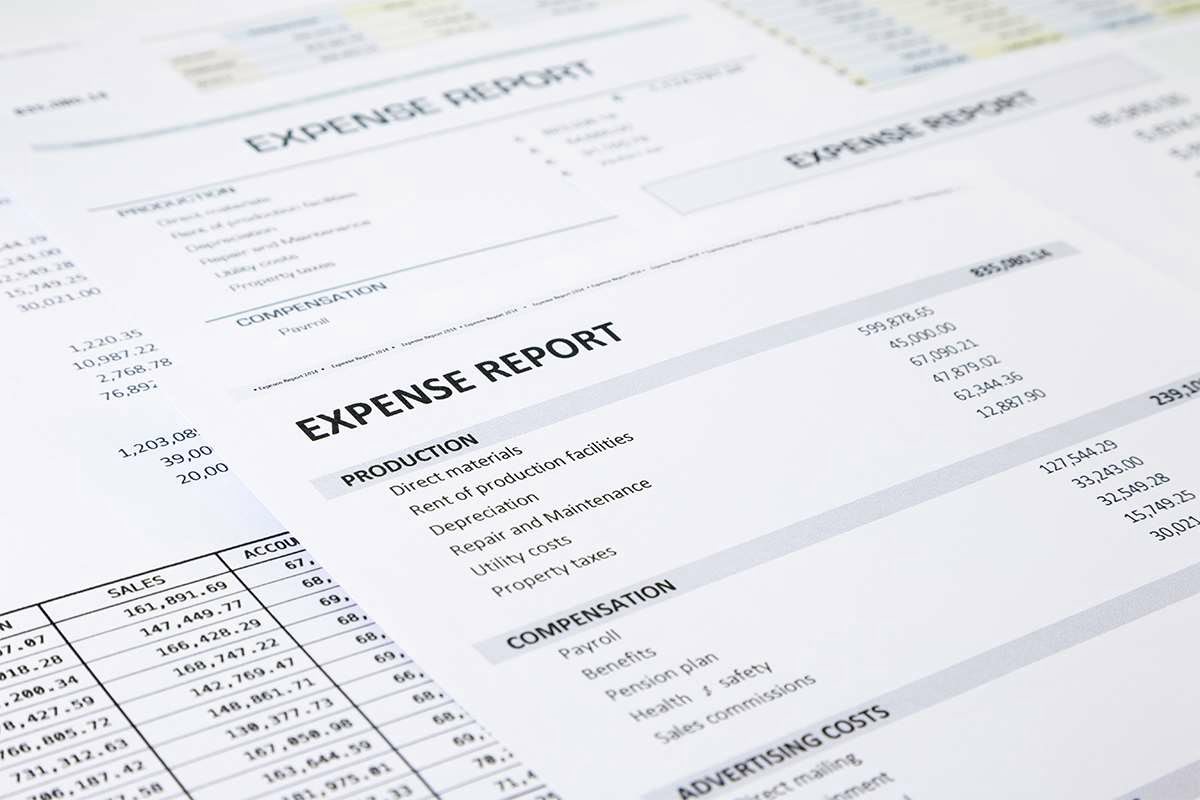
They are categorized into accrued expenses, fixed expenses, non-operating expenses, operating expenses, prepaid expenses, and variable expenses. This process, known as cost allocation, assigns shared costs to reflect the resources consumed by each cost object. Proper allocation is necessary for accurate inventory valuation, calculating cost of goods sold, setting prices, evaluating segment profitability, and overall cost management. Direct costs can be clearly and economically identified with a single cost object.

How Expenses Are Recorded

These are expenses that are not material enough to be a line item in the income statement. There are different accounting methods for calculating depreciation, some of the most common ones are the Straight Line Online Bookkeeping Method, Reducing Balance Method etcetera. This section aims to clarify common inquiries regarding the categorization of expenses in bookkeeping, offering a straightforward approach for both personal and business finances. Expenses are a daily occurrence in many business and accounting roles, so a potential employer would likely assume you understand expenses if you have prior work or internship experience in finance.
